Nuclear developments in France, Germany, the Czech Republic, and beyond

Recent happenings in Europe highlight that nuclear power activities are expanding globally. Here is a roundup of headlines with an international flavor.
Ageing nuclear assets don't have to mean higher maintenance costs. Discover how HVTS® cladding helps extend the life of PWR secondary system components, reduce outage duration, support ALARA principles, and protect against FAC, erosion-corrosion and other degradation mechanisms. Learn more.

Recent happenings in Europe highlight that nuclear power activities are expanding globally. Here is a roundup of headlines with an international flavor.

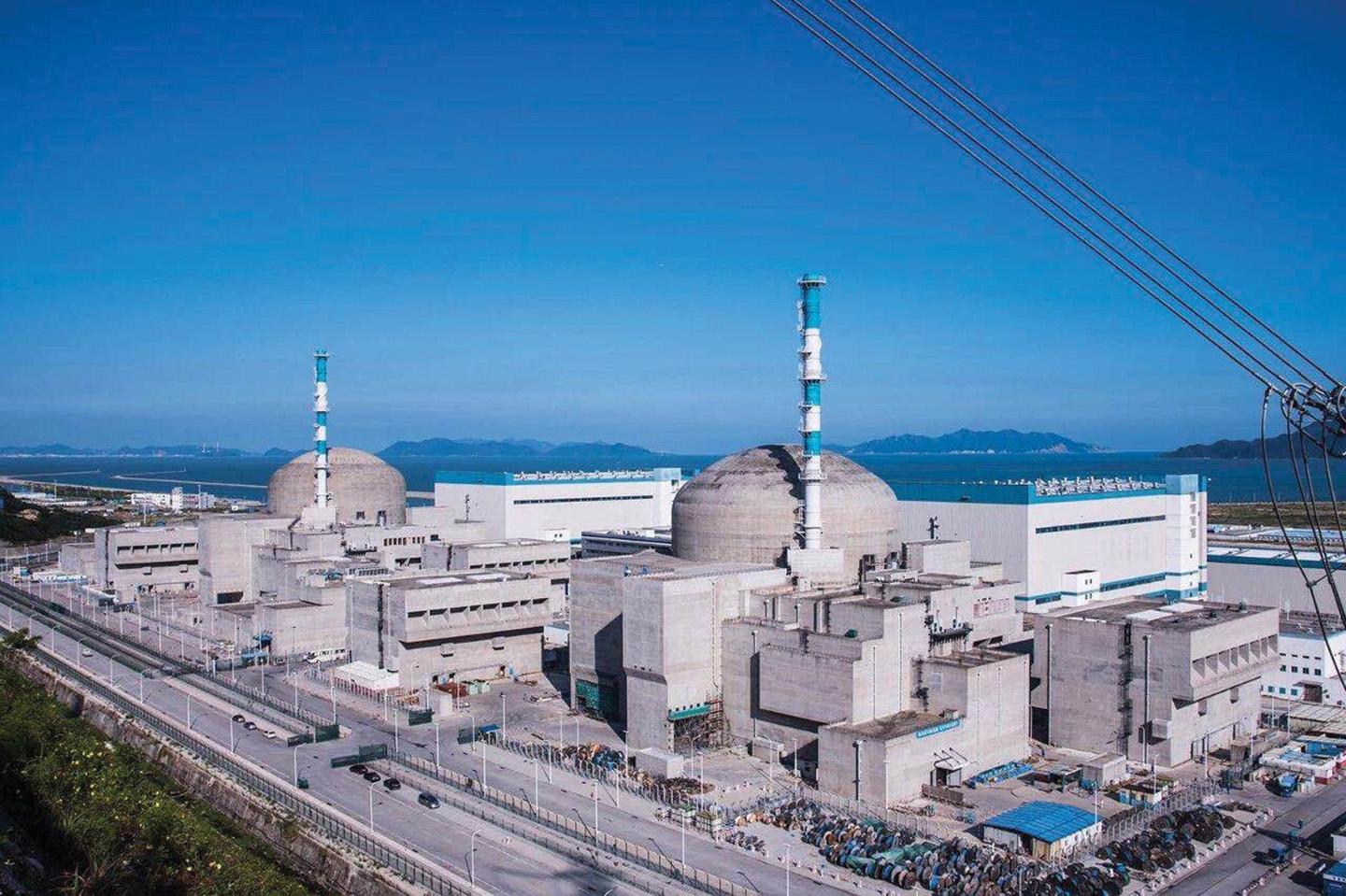
China’s Taishan-1, which was shut down last summer due to damaged fuel rods, resumed operations on August 15.
The plant briefly made headlines last summer—as much for the damage inside the reactor as for the media fallout. In June 2020, plant operators found damage to the cladding on about five of the 60,000 fuel rods in Taishan-1, one of the plant’s two 1,660-MW EPRs. What happened next seemed like a bad game of “telephone.”

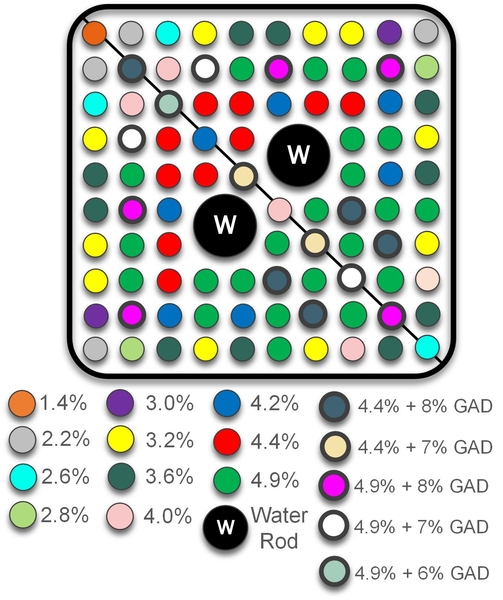
In this AI-designed layout for a boiling water reactor, fuel rods are ideally positioned around two fixed water rods to burn more efficiently. MIT researchers ran the equivalent of 36,000 simulations to find the optimal configurations. Colors correspond to varying amounts of uranium and gadolinium oxide in each rod. Image: Majdi Radaideh/MIT
Researchers at the Massachusetts Institute of Technology and Exelon show that by turning the nuclear fuel assembly design process into a game, an artificial intelligence system can be trained to generate dozens of optimal configurations that can make each fuel rod last about 5 percent longer, saving a typical power plant an estimated $3 million a year, the researchers report.
The AI system can also find optimal solutions faster than a human and can quickly modify designs in a safe, simulated environment. The results appear in the journal Nuclear Engineering and Design.